

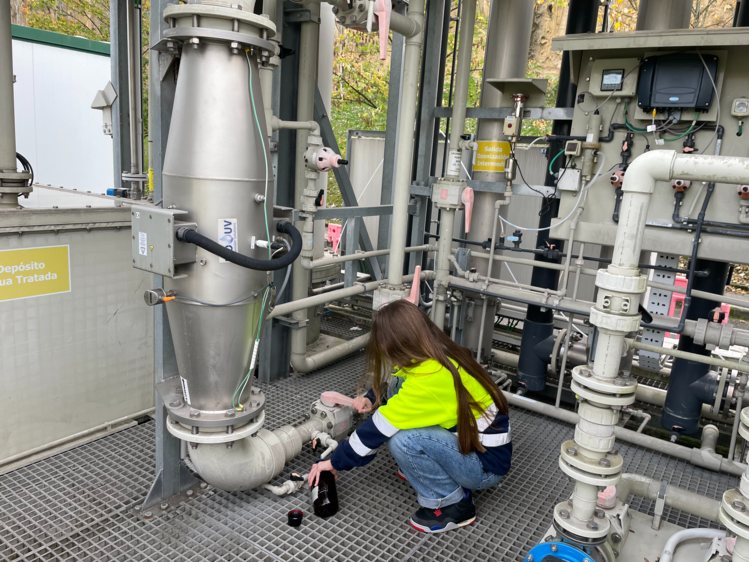
Ultraviolet radiation (UV) is a widely used technology in drinking water treatment as a disinfection barrier. In addition, its combination with selected oxidants may offer new opportunities for contaminant removal and improved water quality through advanced oxidation processes.
Within this context, CATABB has launched the UV-TREAT project, which aims to assess the potential of UV treatment to reduce the formation of disinfection by-products, such as trihalomethanes (THMs), and to evaluate its effects on parameters associated with organic matter, including dissolved organic carbon (DOC), UV absorbance and specific UV absorbance (SUVA). The tests will be carried out at the CATABB pilot plant, comparing different treatment configurations and pre-oxidants, as well as the results obtained with and without UV application. Its performance will also be compared against other processes, including ozonation and activated carbon adsorption.