

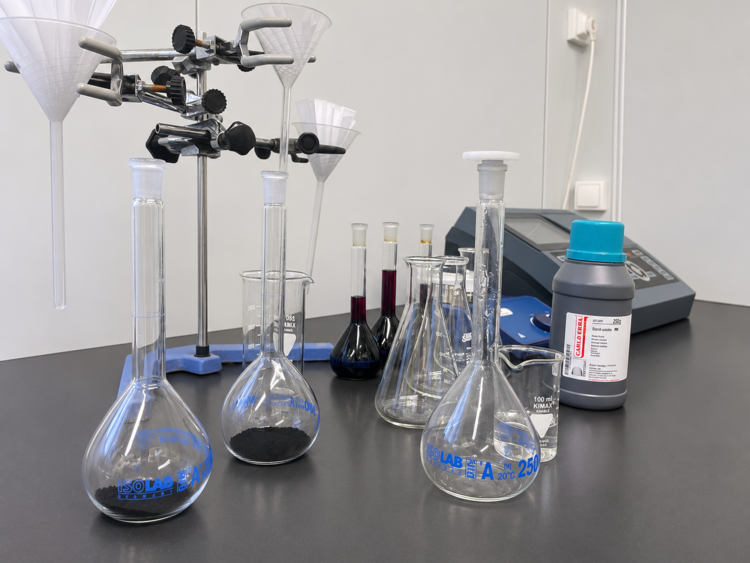
Granular activated carbon (GAC) filters play an important role in drinking water treatment, particularly in the removal of organic matter, micropollutants and compounds that may affect taste and odour. When these filters are taken out of service, appropriate storage conditions are essential to preserve the carbon’s adsorption capacity, prevent undesirable biological growth and ensure its reliable return to operation.
Within this context, CATABB has launched the MAFICA III and MAFICA IV projects, building on the earlier MAFICA I and II studies. The research will be undertaken through two parallel activities. MAFICA III will involve the development of a GAC maintenance manual, aimed at optimising management and storage procedures at treatment plants. MAFICA IV, scheduled to run over ten four-month periods, will investigate the evolution of activated carbon stored under different conditions: moist, submerged, with washing, and with the addition of chlorine dioxide (ClO2). The capacity and characteristics of the various samples will be assessed using iodine number, methylene blue adsorption and biofilm formation, together with other parameters such as pH, redox potential, particle-size distribution and moisture content.