

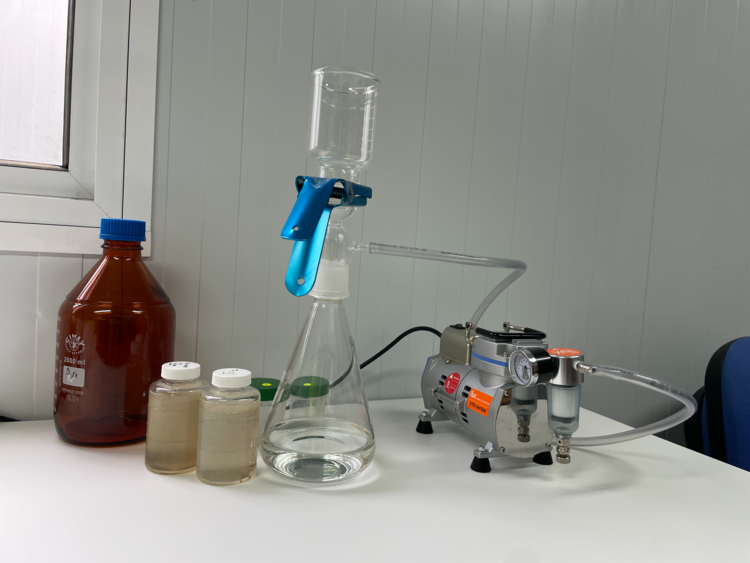
Drinking water treatment requires a continuous search for alternatives and complements to conventional processes, with the aim of optimising space, reducing chemical consumption and ensuring an effective barrier against resistant pathogens. In this context, CATABB has launched the MEMBRANTAP project, a research study aimed at evaluating the operational performance and retention efficiency of different membrane filtration processes at laboratory scale.
The study will use water samples sourced from the Zadorra reservoirs and treated at the CATABB pilot plant. A comparison will be conducted between vacuum-operated microfiltration systems (MF; 0.22 µm and 0.1 µm) and ultrafiltration (UF; 50 kDa), and the plant’s conventional treatment process under a range of operating configurations.