
The NEUTRACLOR project addresses the environmental challenges arising from maintenance operations on the potable water distribution network. During these interventions, it is necessary to drain sections of the network to carry out repairs, which involves discharging water containing residual chlorine, an essential element to ensure water quality up to the point of delivery to households. However, the release of this chlorinated water into the natural environment can negatively impact the aquatic fauna of the receiving ecosystem.
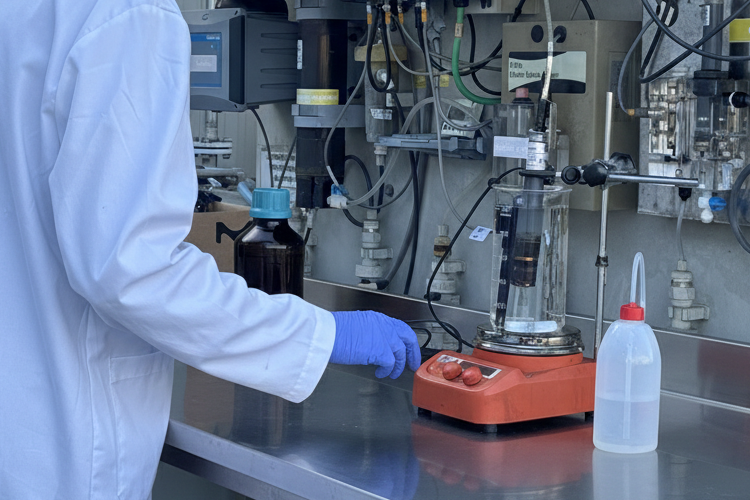
To anticipate these events and minimise environmental impact, CATABB is promoting this project with the aim of studying in-line chlorine neutralisation processes during drainage operations. The objective is to avoid interference with the natural environment without compromising the essential operation and maintenance tasks of the supply network. The research proposes to analyse the effectiveness of two neutralising agents: sodium bisulphite and sodium thiosulphate. These compounds will be evaluated under a variety of operational conditions, including different concentrations of residual chlorine and varying dosages of neutraliser. This approach will allow for the study of the behaviour of both products in real-world working scenarios.
The main objective of the project is to develop a standardised and validated method of operation that enables maintenance activities to be carried out in an environmentally responsible manner. The results will provide crucial data for establishing effective neutralisation protocols, thereby protecting receiving aquatic ecosystems and ensuring compliance with environmental regulations during maintenance operations on the distribution network.